
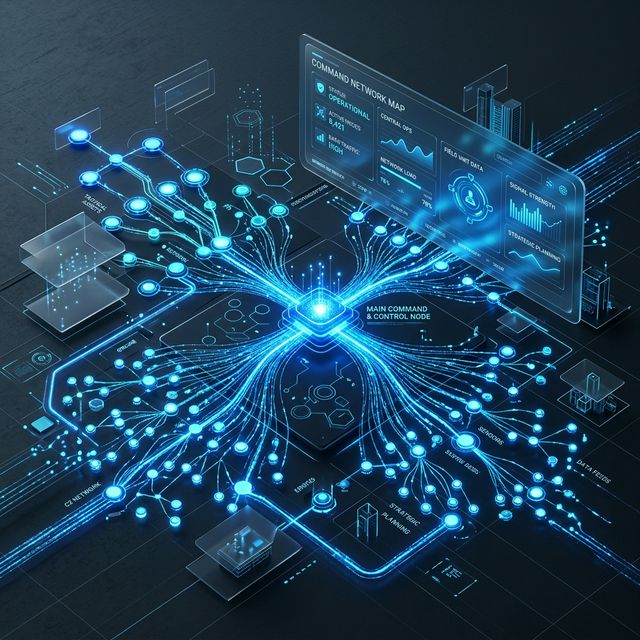
Universal Command & Control Interface (UCI)
The Universal Command and Control (C2) Interface (UCI) standard provides a common message definition for performing mission operations and enables C2 coordination across sensors, vehicles, data products, and software components.
This site focuses exclusively on the technical standard and documentation. Example “hello world” software implementation code is forthcoming.
Overview
The UCI standard defines a messaging architecture that enables interoperable, mission‑level command and control across multi‑domain systems — air, land, sea, space, and cyberspace. It includes:
- Message definitions via the UCI Schema
- Interaction patterns via the Normalized Interface Specification
- Schema design rules via the Schema Style & Design Specification
- Compliance expectations for adopting programs
The UCI standard supports both command/control messages and situational awareness/data messages. It is intentionally technology‑agnostic — allowing programs to adopt modern technologies without breaking interoperability.
Why UCI?
The UCI standard is designed to support the need for rapid, interoperable, multi‑domain mission execution.
Interoperability Across Platforms
UCI enables seamless data exchange across heterogeneous systems.
Modularity & Flexibility
Programs can adopt only the messages they need using Message Sets and Program Schemas.
Technology Independence
UCI avoids locking programs into specific encodings or transports.
Modern Mission Needs
Multi‑domain operations, machine‑to‑machine C2, situational awareness, and secure messaging.
Reduced Integration Risk
Common message definitions reduce ambiguity and integration cost.
UCI is a “living standard,” evolving to meet mission needs while ensuring backward compatibility where possible—making it a future-proof foundation for mission-critical systems.
Related Standards
The UCI standard is leveraged by a variety of open architectures for Platforms, Autonomy, Weapons, and Terrestrial applications.